
 Light
Light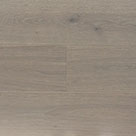 Grey
Grey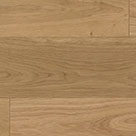 Natural
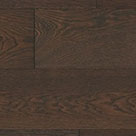 Dark
Dark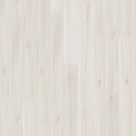 White
White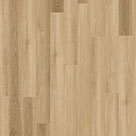 Light
Light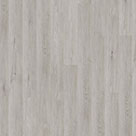 Grey
Grey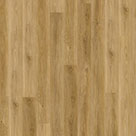 Natural
 Dark
Dark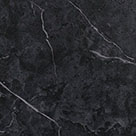 Black
Black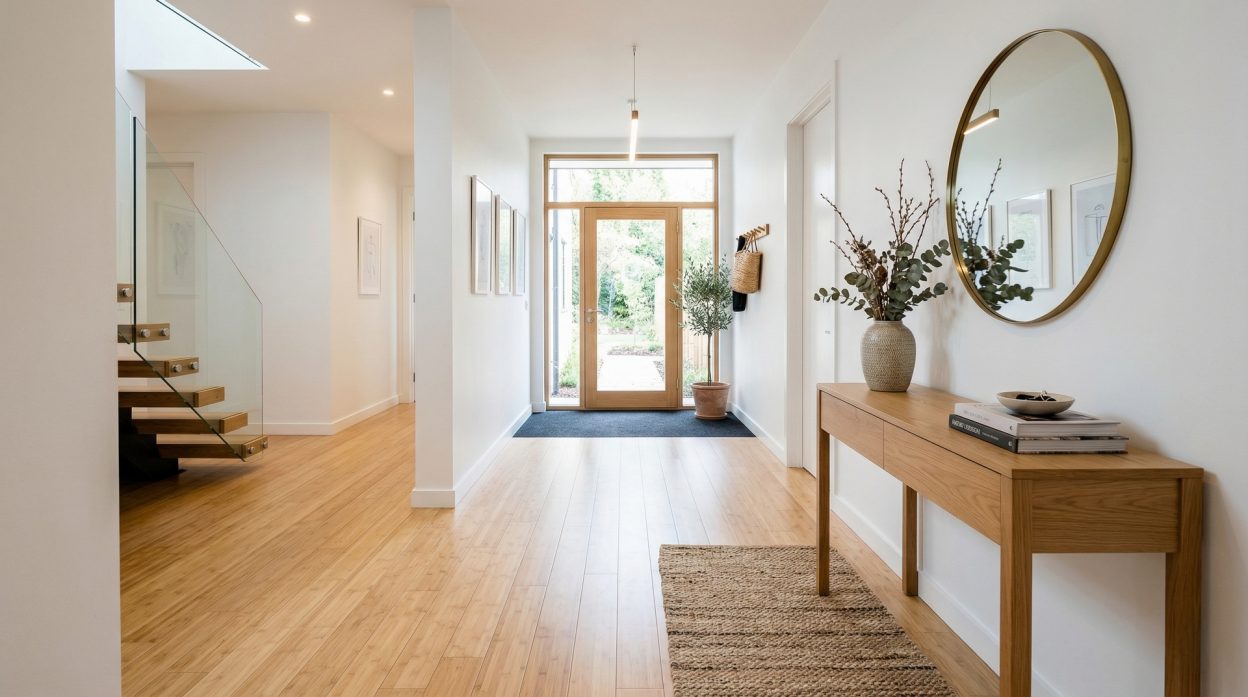
When looking to update a room, finding a surface that combines natural beauty with lasting durability is key. With over 40 years of hands-on flooring experience, our team has seen many materials come and go, but the rising interest in eco-friendly building has brought one particular option to the forefront. If you are searching for a sustainable alternative to traditional hardwood, bamboo flooring is likely on your radar.
Unlike standard timber, this unique material offers a distinct look and an impressive set of environmental credentials. However, before committing to an installation, it is crucial to understand how it behaves in a busy household. This guide will explore everything you need to know, from the manufacturing process and daily maintenance to how it compares against other popular hard floors, helping you make a confident, informed decision for your home.
Jump to Section:
- What Exactly is Bamboo Flooring?
- The Major Benefits for Your Home
- Understanding the Potential Drawbacks
- Bamboo Flooring vs. Engineered Wood and LVT
- How to Clean and Maintain Bamboo Flooring
- Making the Right Choice for Your Next Project
What Exactly is Bamboo Flooring?
Despite its wood-like appearance, bamboo is actually a type of fast-growing grass. To turn this hollow grass into a solid board, the stalks are sliced into strips, boiled to remove sugars, and then dried. From here, the manufacturing process dictates the final style and strength of the bamboo flooring you buy.
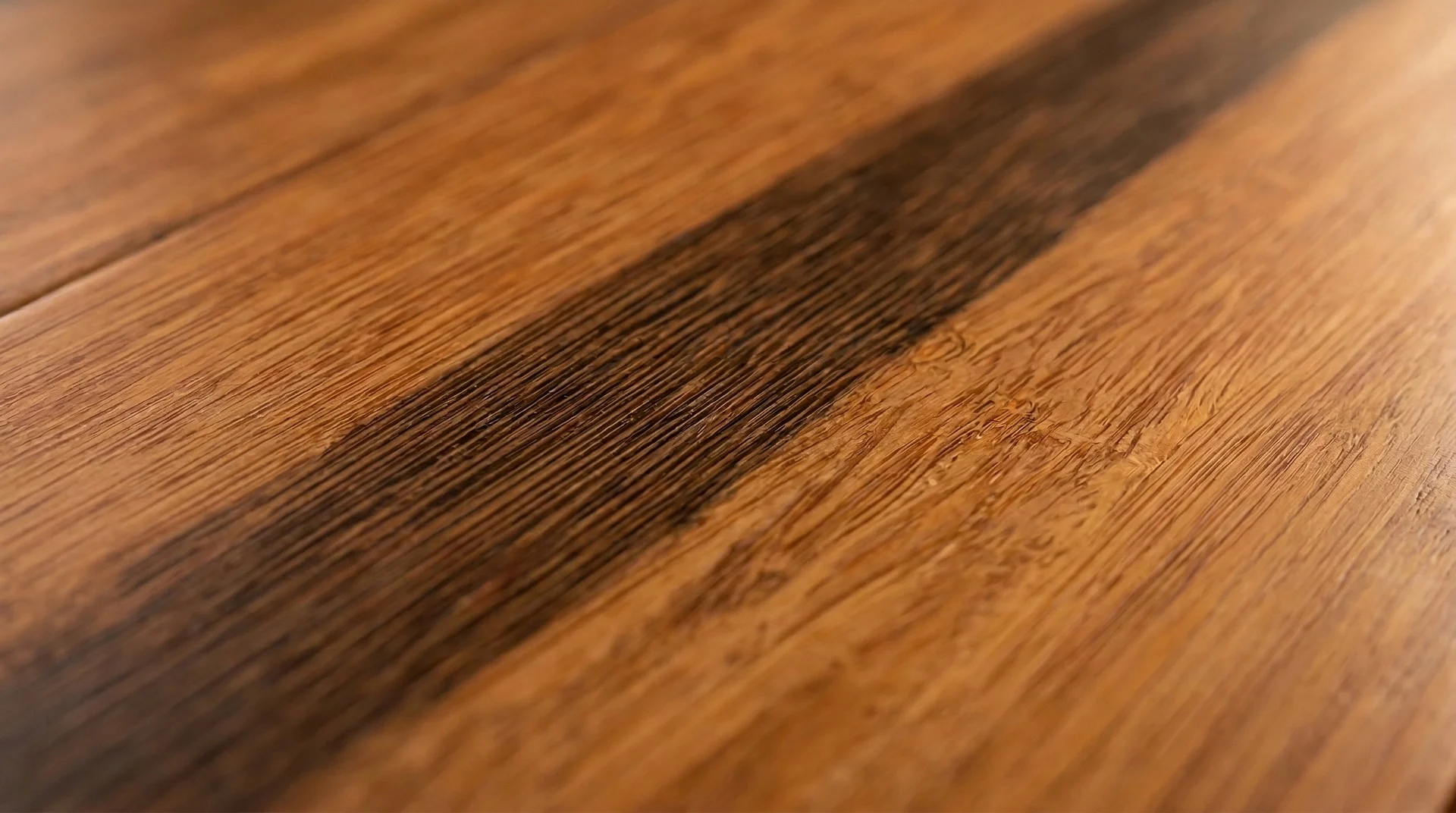
There are three main types. Horizontal bamboo shows the wide “knuckles” of the stalk for a very distinct, natural look. Vertical bamboo aligns the strips on their edge, creating a sleek, linear appearance. Finally, strand-woven bamboo flooring is created by shredding the fibres and compressing them together under extreme heat and pressure with resins. This strand-woven method creates an exceptionally dense and hard-wearing board that is far more durable than the horizontal or vertical options.
The Major Benefits for Your Home
The primary reason many homeowners choose this material is its sustainability. Because it is a grass, it regenerates from its own roots and can be harvested every three to five years, compared to the decades it takes for a hardwood tree to mature. This makes bamboo flooring a highly renewable resource.
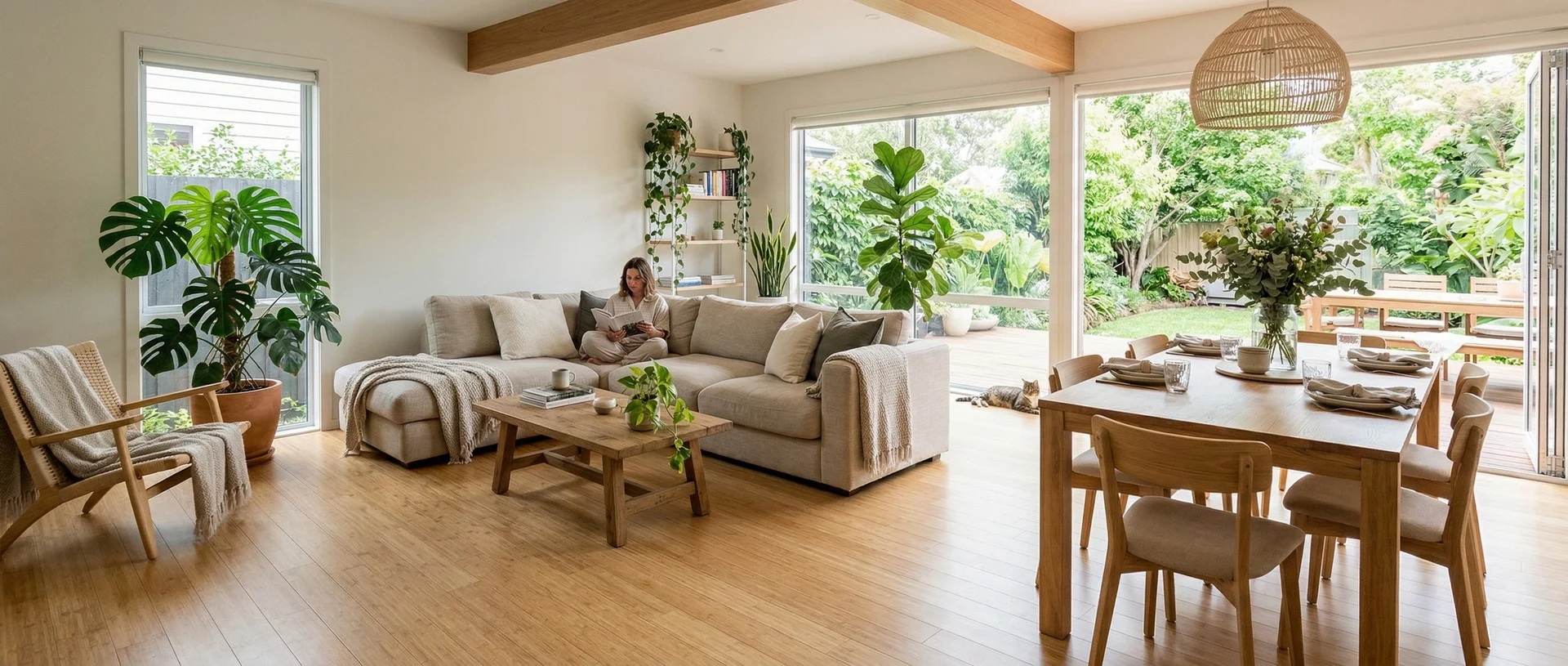
Beyond its eco-credentials, strand-woven variations are incredibly tough. They score very highly on hardness scales, often outperforming traditional hardwoods like oak. This makes it a solid option for high-traffic areas like living rooms and hallways. Furthermore, it brings a clean, contemporary feel to a room, offering a lighter, more uniform appearance that pairs beautifully with modern interior design. However, if you prefer the deep, classic grain and timeless character of traditional timber, exploring engineered wood flooring might be a better fit for your vision.
Understanding the Potential Drawbacks
While it has many strengths, it is vital to understand the limitations before you buy. Because it is a natural, fibrous material, bamboo flooring is highly susceptible to changes in moisture and humidity. If the air is too damp, the planks can absorb moisture and swell; if the air is too dry, they can shrink and gap.
Because of this moisture sensitivity, it is not a suitable choice for wet environments. You should never install it in a bathroom or a utility room prone to splashes and high humidity. If you are looking to create a worry-free, waterproof space, you will need to look at alternatives. Our comprehensive bathroom flooring guide offers excellent waterproof solutions designed specifically to handle steam and standing water without warping. Additionally, while the boards are hard, the surface seal can still be scratched by sharp pet claws or dragged furniture.
Bamboo Flooring vs. Engineered Wood and LVT
When planning a renovation, it helps to compare your options. How does bamboo flooring stack up against the most popular alternatives on the market?
Engineered wood features a real timber top layer (like European Oak) bonded to a stable multi-ply core. This makes engineered wood exceptionally stable and much better suited for use with underfloor heating than solid bamboo. Engineered wood also offers a wider variety of rich, traditional tones and textures.
On the other hand, if durability and ease of maintenance are your top priorities, vinyl click flooring (specifically Rigid Core SPC) is a fierce competitor. While bamboo flooring requires careful moisture management, high-quality LVT is 100% waterproof, incredibly scratch-resistant, and can realistically mimic the look of natural wood. For busy family homes with pets and young children, SPC vinyl often provides a more forgiving and stress-free surface.
How to Clean and Maintain Bamboo Flooring
Keeping your floor looking pristine requires a gentle, consistent routine. Dirt and grit act like sandpaper underfoot, so regular sweeping or vacuuming (using a hard-floor attachment without a rotating beater bar) is essential to prevent surface scratches.
When it comes to washing bamboo flooring, less is more. Never use a soaking wet mop or a steam cleaner, as forcing moisture into the joints will cause irreparable swelling. Instead, use a slightly damp microfibre mop with a pH-neutral cleaner specifically designed for natural floors. To protect the surface from long-term damage, we highly recommend reading our floor pads guide and applying heavy-duty felt protectors to the legs of all your chairs, tables, and sofas.
Making the Right Choice for Your Next Project
Ultimately, choosing bamboo flooring is a statement of intent. It is an excellent choice for homeowners who want a hard-wearing, modern-looking surface and are passionate about using highly renewable, sustainable materials. However, it demands a controlled environment and careful maintenance to ensure it stays looking its best.
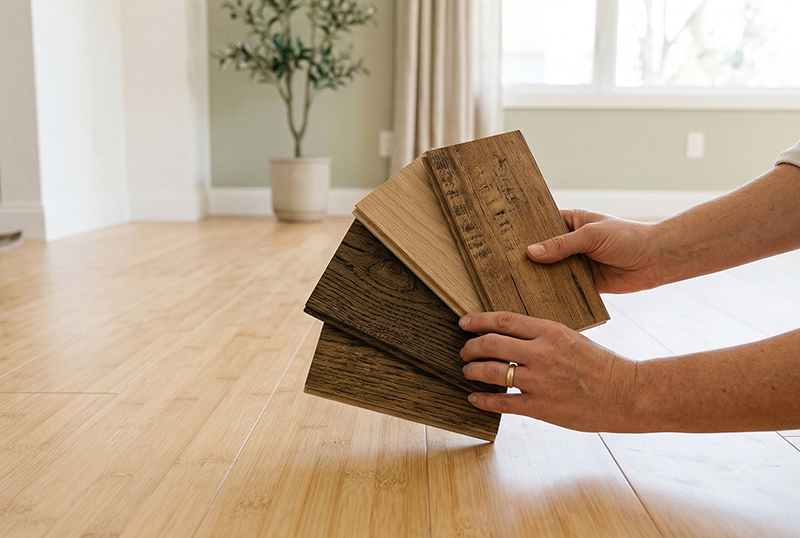
If you are weighing up your options, the best way to decide is to feel the materials for yourself. We offer a next-day free sample service across our entire range, allowing you to compare textures and tones in the natural light of your own rooms. Plus, with free delivery on all orders over £500 (excluding VAT), getting the perfect, durable floor for your home has never been easier.