
 Light
Light Grey
Grey Natural
 Dark
Dark White
White Light
Light Grey
Grey Natural
 Dark
Dark Black
Black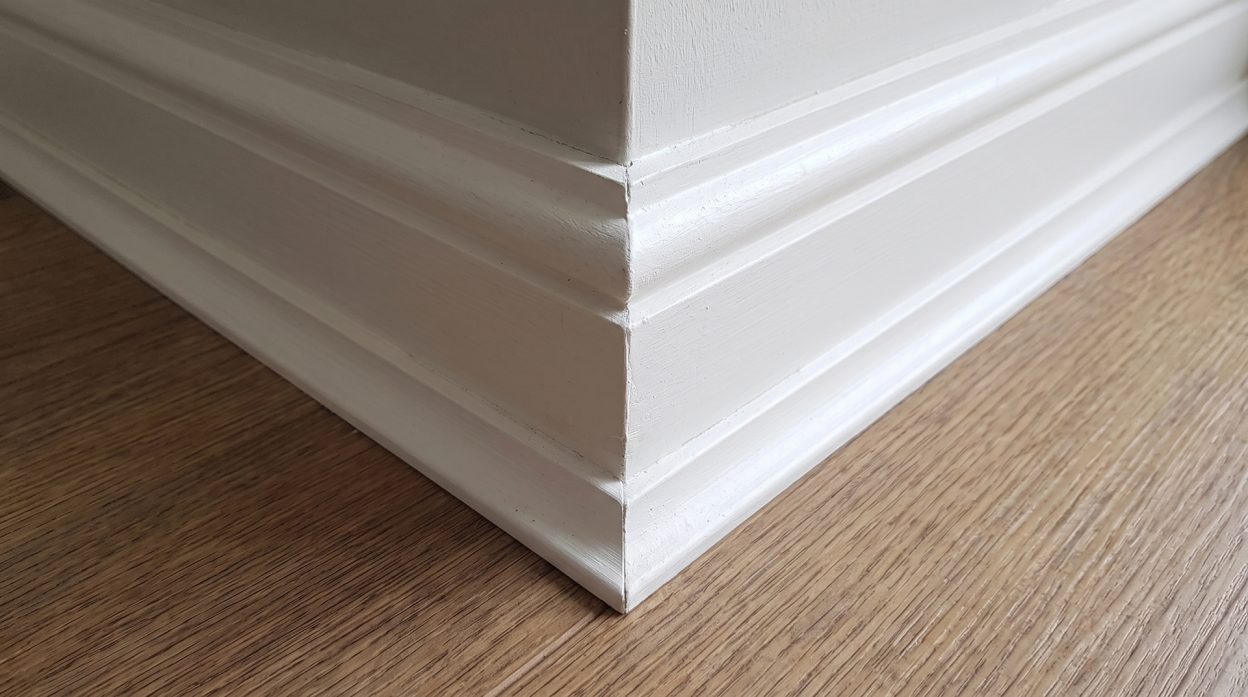
Every new floor needs a small but essential finishing touch: a trim that covers the expansion gap around the perimeter and leaves the room looking tidy. White scotia beading is one of the most popular choices for that job, especially in modern, light, or minimalist interiors where anything other than a clean white edge would jar.
In this guide, we’ll help you decide whether white scotia beading is the right finishing touch for your project, how it compares to replacing the skirting boards entirely, what to look for on the spec sheet, and how to choose the right profile for your home.
Jump to Section:
- What Is White Scotia Beading?
- Why Buyers Choose White Scotia Beading
- White Scotia Beading vs Skirting Boards: Which Should You Use?
- Which Rooms Suit White Scotia Beading?
- What to Look for When You Buy
- Common Buyer Pitfalls (and How to Dodge Them)
- Choosing Your White Scotia Beading with Confidence
- Final Thoughts on White Scotia Beading
What Is White Scotia Beading?
White scotia beading is a small moulding with a concave curved profile, finished in white, that sits in the angle between a new floor and the existing skirting board. Its job is to cover the expansion gap that every floating floor needs around its perimeter, without the cost and disruption of ripping off the old skirting.
It’s typically made from MDF (medium-density fibreboard) for paintable options, or from solid softwood for a real-wood feel. The white finish can be a pre-applied coat, a primer ready for your own topcoat, or occasionally a vinyl-wrapped foil for wipe-clean durability. Standard lengths are usually around 2.4 metres, and profiles vary by height and curve depth to suit different floor thicknesses.
The key thing for you as a buyer is this: it’s a finishing detail, not a structural element. Pick a profile and finish that match the room, and it’ll quietly do its job for decades.
Why Buyers Choose White Scotia Beading
So why has white scotia beading become the default perimeter finish for so many installations? Because the practical benefits stack up:
- Cheaper than replacing skirting. Ripping off old skirting, disposing of it, and fitting new boards costs labour, time, and money. A neat bead of trim avoids all of that.
- Covers the expansion gap. Floating floors (laminate, click vinyl, some engineered wood) need a 10mm gap around the edge to allow for seasonal movement. Scotia beading hides it cleanly.
- Clean, modern look. White against white walls and white skirting disappears visually but leaves a crisp, finished edge.
- Paintable. Most white scotia beading arrives pre-primed or pre-finished, and can be touched up or repainted to match your exact colour scheme.
- Quick to install. A confident DIYer can fit a room’s worth in an afternoon with a mitre saw, a hammer, and some panel pins or grab adhesive.
The trade-off is that scotia beading sits proud of the skirting board by its own depth, which means it doesn’t replace a deep skirting and can collect dust along the top edge. For most homes, that’s a small price to pay for the convenience.
White Scotia Beading vs Skirting Boards: Which Should You Use?
It’s also the question that comes up most often, and the honest answer is that neither is universally better. They do different jobs.
| If your situation looks like this… | Go for… |
|---|---|
| The existing skirting is in good condition and you don’t want the disruption of replacing it | White scotia beading, every time |
| The skirting is damaged, dated, or the wrong height for your new floor | Replace the skirting boards instead |
| You’re after a contemporary minimalist look with a totally flush finish | Replace the skirting, or use a taller, square-profile trim |
| You’re on a tight budget or a quick refresh before moving | Scotia beading for speed and savings |
A few practical points worth weighing:
- Scotia beading is cheap, fast to fit, and easy to repaint. It adds a small curved step on top of the existing skirting rather than replacing it.
- Replacing the skirting gives a totally flush, modern finish and lets you choose a new height or profile. It’s more expensive and time-consuming.
- A combination is also common: leave the original skirting in place but cap it with a taller, square-profile trim for a chunkier modern look.
If you’re not sure which to go for, the safe answer is white scotia beading when the existing skirting is sound. If the skirting is already on its last legs, replacing it makes more sense than papering over the cracks. Our beading fitting guide walks through the install in detail.
Which Rooms Suit White Scotia Beading?
This is where most buyers get it right without much help, because white scotia beading suits almost every interior. Here’s how it usually breaks down:
- Living rooms, bedrooms, and hallways. White scotia beading is the default for these spaces. It disappears against white walls, complements neutral colour schemes, and matches modern skirting styles.
- Kitchens. Beading works here too, but you’ll want a wipe-clean or foil-wrapped finish rather than bare MDF. For the wider flooring choice in kitchens, see our kitchen flooring guide.
- Bathrooms. The same caveat applies, with the added need for waterproof flooring underneath. Our bathroom flooring guide covers the wider choices for wet rooms.
- Period properties. A chunky Victorian or Edwardian skirting often looks better left alone, with the original boards restored and no scotia at all. If you do fit beading, keep the profile modest so it doesn’t fight the architecture.
- Offices and commercial spaces. This trim gives a clean professional finish, especially around perimeter trunking. Our commercial flooring hub covers the wider flooring choices for business.
There’s no single right answer here. The right trim is the one that suits the room, the existing skirting, and your eye.
What to Look for When You Buy
Once you’ve decided that white scotia beading is the right finish, the spec sheet tells the rest of the story. Here’s what to check first:
- Material. MDF is the budget choice, paintable and stable but it hates standing water. Solid softwood (pine) takes paint well and feels more substantial; solid hardwood (oak) is premium and often left unfinished. Our scotia beading range covers all three.
- Finish. Pre-finished white saves time and gives a consistent sheen. Pre-primed lets you apply your own topcoat for an exact colour match. Unfinished bare wood needs priming and painting before fitting.
- Profile size. The height and curve depth should be enough to cover your floor’s expansion gap plus a few millimetres of overlap. Standard scotia is around 15mm to 22mm tall; taller profiles are available for chunkier skirting.
- Length. Most white scotia comes in 2.4m lengths. Longer lengths reduce the number of joints but are harder to transport and cut. Shorter lengths mean more mitres and more places for joints to open up.
- Quality of finish. Run your finger along a sample. A smooth, consistent surface with no fibres, ridges, or dents will paint cleanly and look sharp once fitted.
- Quantity. Measure the perimeter of the room in metres, then add at least 10% for mitre waste and offcuts. For a room with several internal or external corners, add 15%.
If the spec sheet makes your eyes glaze over, that’s normal. That’s also why requesting a callback to talk through the right profile for your floor is often the quickest move.
Common Buyer Pitfalls (and How to Dodge Them)
Buying white scotia beading is the kind of decision where the same handful of mistakes trip people up time and again. None of them are disasters; they’re just things that are easier to avoid than to fix later.
- Buying too little. The classic one. Measure the perimeter twice, then add 10-15% for mitres and offcuts. Running out halfway around a room is annoying.
- Picking the wrong profile. A tiny scotia on a thick floor looks lost; a chunky scotia on a thin floor looks top-heavy. Match the profile height to the floor thickness and the existing skirting.
- Forgetting to paint before fitting. Bare MDF or primed beading looks raw once it’s on the wall. Paint at least one coat before fitting, and a second after the mitres are cut.
- Skipping the mitres. Butt joints in the middle of a wall are obvious and ugly. Mitre internal and external corners for a professional finish.
- Using bare MDF in a wet area. Kitchens, bathrooms, and utility rooms need a foil-wrapped or fully sealed finish, not raw MDF.
- Buying on price alone. The cheapest beading often arrives chipped, dented, or with a finish that won’t take paint evenly. Pay for a known brand and a clean profile.
One more, and probably the most common: don’t fit the beading before the floor has had 24 hours to acclimatise and settle. A floor that moves later will push against the trim and either bow it or pop the joints.
Choosing Your White Scotia Beading with Confidence
Buying white scotia beading should feel like a small, satisfying finish to your flooring project. Here’s the process we’d recommend:
- Measure the perimeter of each room in metres, including any door thresholds. Add 10-15% for waste.
- Shortlist two or three profiles that suit your floor thickness and existing skirting. Our free flooring guides and FAQs help narrow things down.
- Order a sample or two to check the finish, profile, and colour against your skirting and walls.
- Talk to a human if you’re stuck. Our request a callback service puts you in touch with one of our flooring experts who can advise on profile, length, and fitting method.
- Place your order with confidence, knowing you’ve matched the trim to the room and the floor.
That’s it. No jargon, no upselling, just a sensible process that helps you land on the right profile and the right quantity.
Final Thoughts on White Scotia Beading
White scotia beading is one of those finishing touches that nobody notices when it’s done well, but everybody notices when it’s wrong. Pick the right profile, buy enough, paint before fitting, and mitre the corners, and the room will feel properly finished. Browse our scotia beading range to find the right profile for your floor, and remember free UK delivery on orders over £500 (excluding VAT) keeps things straightforward when you’re ordering the rest of the flooring too.